
The Local Risk Landscape
Orlando sits well inland in Orange County, so like the rest of Central Florida it's spared direct coastal storm surge - but not hurricane-force wind. When a storm crosses the peninsula, Orlando still takes sustained tropical-storm and hurricane winds, along with the hail and lightning that come with the region's frequent summer thunderstorms.
What genuinely sets Orlando apart is its tourism economy. Walt Disney World, Universal Orlando, and SeaWorld have created one of the largest short-term and vacation-rental home markets in the country, concentrated in corridors like Kissimmee, Championsgate, and Windermere. A home bought specifically as a vacation rental investment carries insurance needs that a standard owner-occupied homeowners policy was never built to address.
On the road, I-4 through downtown Orlando is one of the most congested and historically dangerous stretches of interstate in the country, made worse by SR-408, SR-417, and Florida's Turnpike all converging near the tourist corridor - plus a steady volume of unfamiliar rental-car and out-of-town drivers navigating routes they've never driven before.
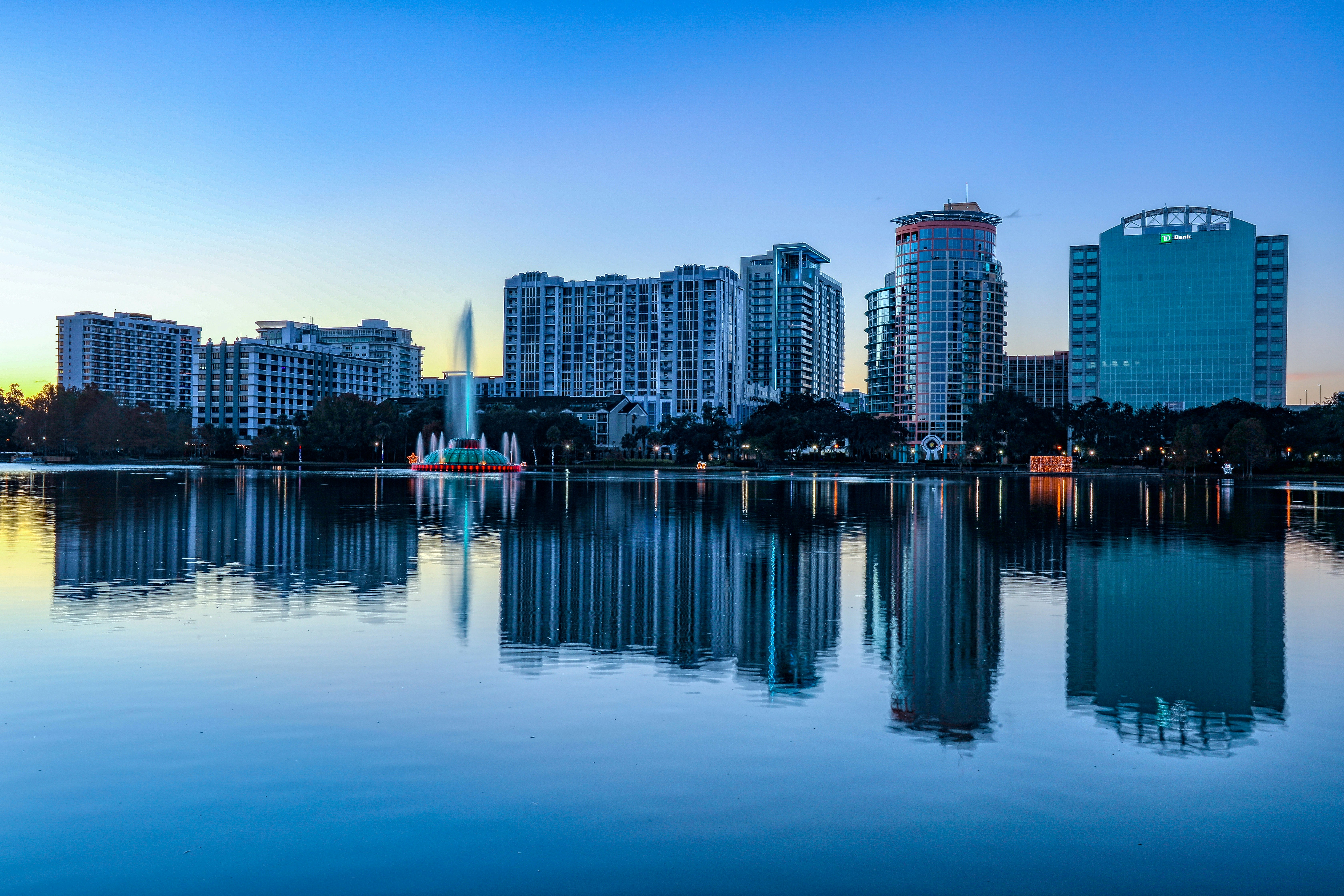
Orlando is also a city built around lakes - Lake Eola downtown, the Winter Park chain of lakes, and countless neighborhood lakes throughout College Park and the surrounding suburbs - which creates the same kind of localized, lake-driven flood exposure found elsewhere in Central Florida, independent of any coastal risk.
Property & Flood Coverage Breakdown
The single biggest coverage gap we see in Orlando is a mismatch between how a home is actually used and what its policy assumes. Most standard homeowners policies are written for owner-occupied homes and restrict or exclude coverage once a property is rented out short-term. Homes near the parks operating as Airbnb or VRBO rentals typically need a landlord policy or a homeowners policy with a specific short-term-rental endorsement - and carriers vary widely in what they'll actually allow.
Flood risk in Orlando follows the same address-by-address logic as the rest of Central Florida: proximity to Lake Eola, the Winter Park lakes, or a neighborhood retention pond can place a home in a mapped flood zone that has nothing to do with hurricane season - heavy summer rain alone can raise lake levels enough to matter.
Roof age and wind mitigation still drive a large share of pricing here, the same as anywhere in Central Florida: a 4-point inspection and a documented wind mitigation inspection (roof shape, roof-to-wall connections, opening protection) both affect what a policy costs. Historic bungalows around Lake Eola Heights and College Park carry the typical older-roof, older-wiring underwriting considerations that come with homes built decades before current codes existed.
As an independent agency, we place vacation rental properties, owner-occupied homes, and everything in between with carriers that actually match how the property is used - rather than discovering a coverage gap for the first time at claim.
Auto & Commercial Protection
Orlando drivers dealing with the I-4/SR-408/SR-417/Turnpike convergence face some of the highest-incident driving conditions in the state, compounded by the sheer volume of tourists and rental-car drivers unfamiliar with local roads. That combination is exactly why we recommend evaluating bodily injury liability limits well above Florida's state minimums for anyone driving Orlando's tourist corridor regularly.
On the commercial side, we work with property management companies overseeing portfolios of vacation rental units - coverage that looks nothing like a single homeowner's policy - along with the hospitality, restaurant, and attractions-adjacent retail businesses that make up so much of Orlando's commercial landscape, each with general liability, workers' compensation, and commercial property needs shaped by tourism traffic and seasonal demand.