
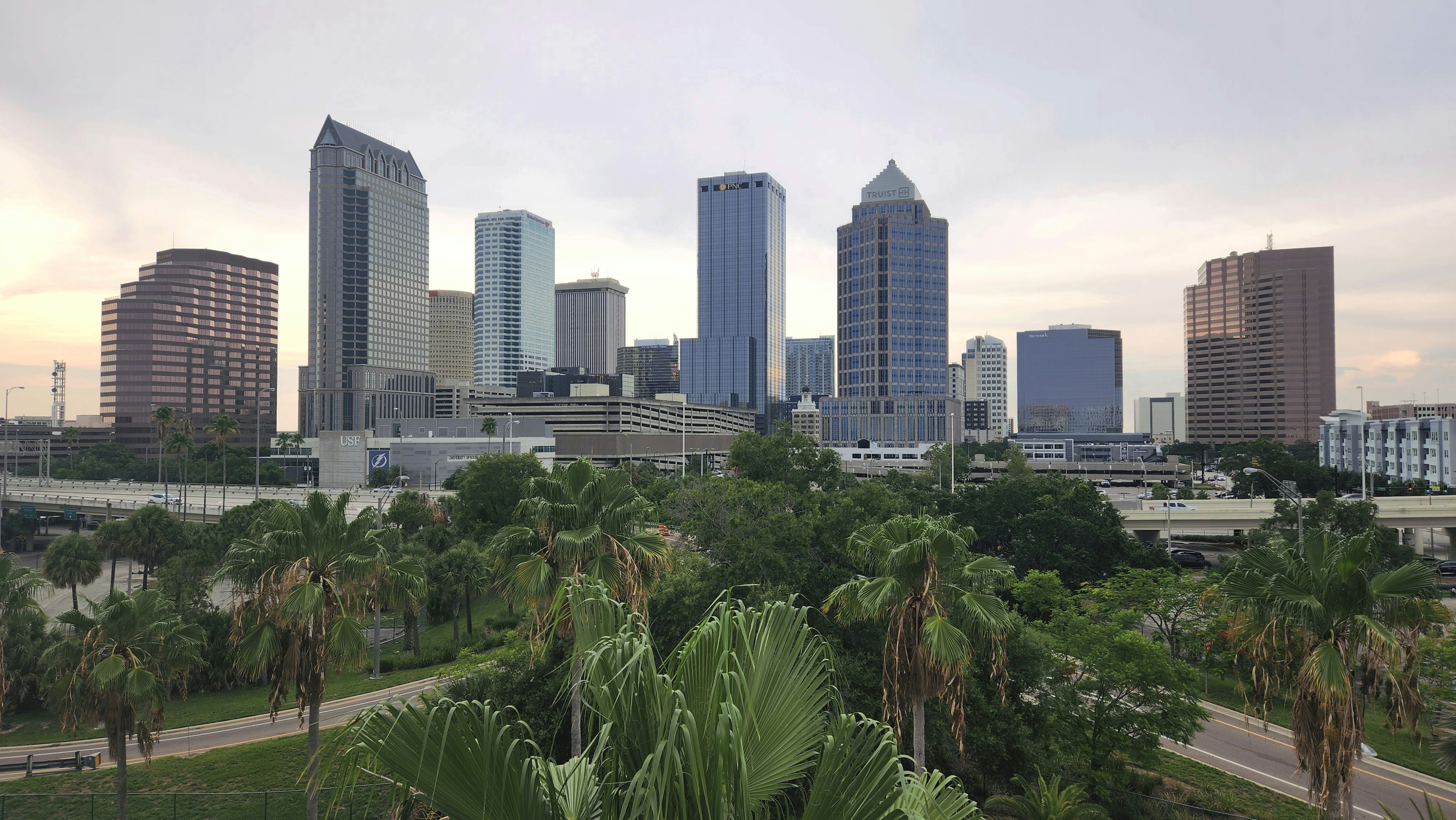
The Local Risk Landscape
Tampa Bay's shape - a large, shallow, funnel-like inlet - makes it one of the most storm-surge-vulnerable metro areas in the country. A direct hurricane hit doesn't need to make landfall on top of the city to push a dangerous wall of water into low-lying South Tampa neighborhoods like Davis Islands, Harbour Island, and the homes along Bayshore Blvd.
Hillsborough County also sits within Florida's well-documented sinkhole belt, a distinct peril from wind or flood that shows up as gradual structural damage rather than a single storm event. Florida law treats it separately from standard wind and water coverage, which is exactly the kind of detail that gets missed on a generic policy.
The Tampa Bay area is also widely regarded as one of the most lightning-prone regions in North America, and the frequent summer thunderstorms that come with it drive real numbers of electrical and fire claims independent of hurricane season. On the road, I-275, I-4, the Selmon Expressway, and Dale Mabry Highway carry some of the heaviest and most accident-prone traffic volumes in the state.
Tampa's proximity to MacDill Air Force Base also shapes the local insurance picture in a way most cities don't deal with: a significant population of military families whose homes and vehicles need coverage that can flex around deployments and PCS moves. On the commercial side, Port Tampa Bay's logistics and warehousing corridor and the growing high-rise, mixed-use development around downtown and Channelside each carry their own property and liability exposures.
Property & Flood Coverage Breakdown
Flood zone designation matters enormously in Tampa. Many South Tampa neighborhoods close to the water - Davis Islands, Harbour Island, and parts of Bayshore Blvd and Hyde Park - sit in high-risk FEMA flood zones tied directly to Tampa Bay's storm surge exposure, where flood insurance is a hard mortgage requirement rather than an optional add-on.
Sinkhole activity requires a separate conversation from flood or wind coverage. Florida law requires insurers to include baseline "catastrophic ground cover collapse" coverage, but the broader "sinkhole loss" endorsement - covering more gradual foundation and structural damage - has to be requested and priced separately. Given Hillsborough County's location within the sinkhole belt, this is worth evaluating property by property rather than assuming it's already covered.
Historic bungalows in neighborhoods like Seminole Heights and Hyde Park, often built in the 1920s through 1940s, come with the same older-roof and older-wiring underwriting challenges you'd expect from homes their age - and properties close enough to the coast can also fall within Florida's wind-borne debris region, which triggers impact-resistant window or shutter requirements on new construction and major renovations.
As an independent agency, we're not limited to carriers that price conservatively for coastal, sinkhole-belt risk. We compare your property against carriers that actually specialize in Tampa Bay's specific mix of exposures, rather than starting from a generic statewide rate and hoping it fits.
Auto & Commercial Protection
Tampa commuters dealing with I-275, I-4, the Selmon Expressway, and Dale Mabry Highway face some of the most congested, highest-incident driving conditions in Florida. That traffic density is exactly why we push clients to look past Florida's state-minimum Personal Injury Protection and evaluate higher bodily injury liability limits - a serious accident on any of those corridors can exceed minimum coverage without much difficulty.
Military families stationed at MacDill AFB have auto insurance needs that don't fit a standard policy cleanly: a vehicle garaged in Tampa during a deployment, a policy that needs to travel with a PCS move, or a second driver added and removed as duty stations change. We help structure coverage around that reality instead of penalizing it.
On the commercial side, we work with logistics and warehousing operators along the Port Tampa Bay corridor on commercial auto and general liability suited to freight and fleet exposure, and with the growing base of downtown and Channelside businesses - retail, hospitality, and professional offices alike - on general liability, workers' compensation, and commercial property built around what's actually being insured.